
Sri Vaishnava Festivals: A Guide for Families Worldwide
Sri Vaishnava festivals are not only dates on a calendar. They are moments of remembrance, gratitude, devotion, family connection, and cultural continuity.
For families living in India, the United States, Canada, the United Kingdom, Australia, Singapore, the Middle East, and other parts of the world, these festivals help keep Sri Vaishnava identity alive across generations. They connect children to stories, parents to tradition, grandparents to memory, and families to temples, acharyas, Azhwars, and Divya Prabandham.
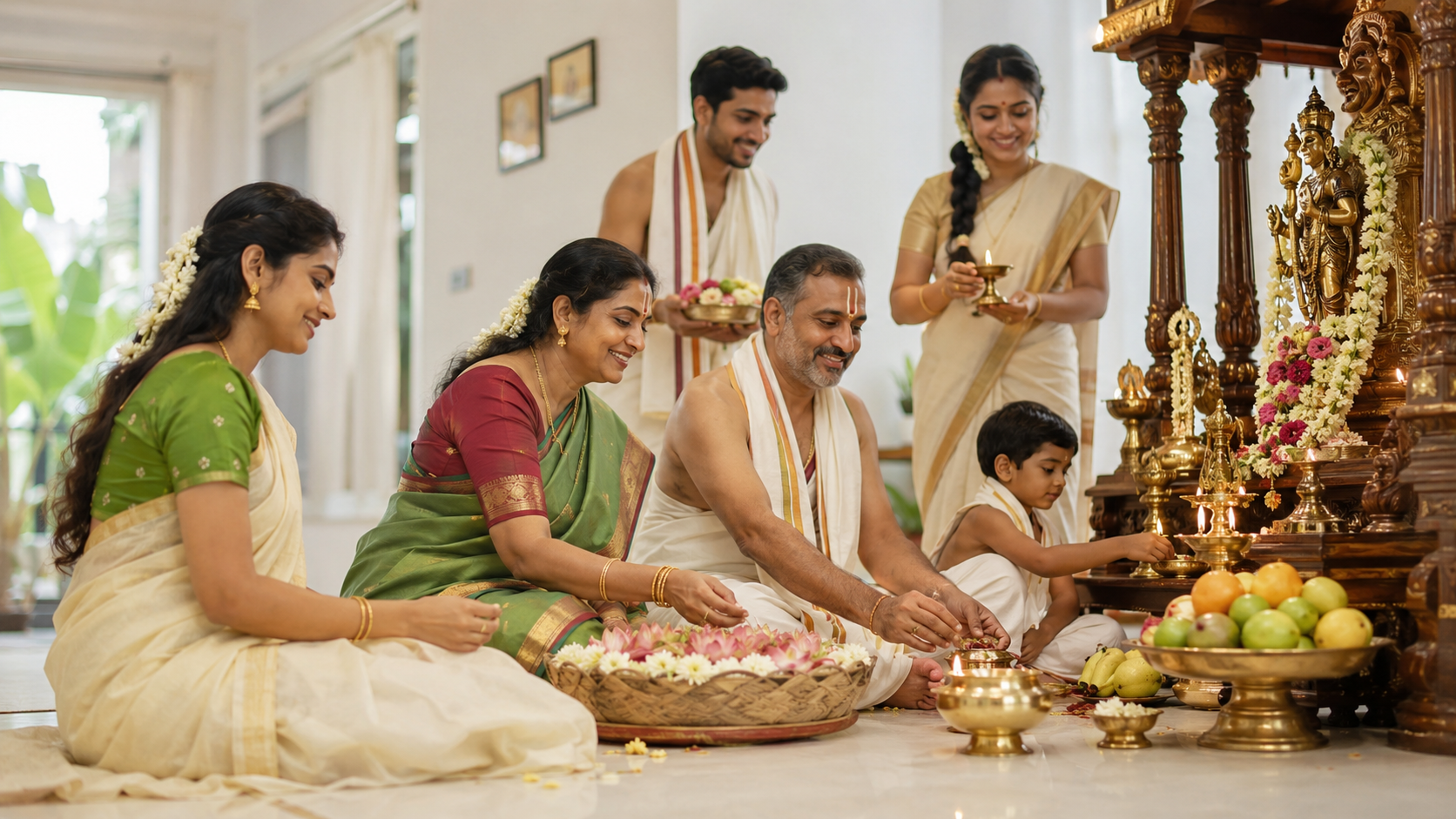
In Sri Vaishnava homes, festivals are often observed with prayer, recitation, prasadam, temple visits, family gatherings, and remembrance of Perumal, Thayar, Azhwars, and Acharyas.
For SVMatrimony families, these traditions also carry a deeper meaning. Marriage is not only about two people meeting. It is about shared values, family culture, spiritual grounding, and the home that two people hope to build together.
Understanding Sri Vaishnava festivals helps families preserve that foundation.
What Makes Sri Vaishnava Festivals Special?
Sri Vaishnava festivals are centered on bhakti, kainkaryam, remembrance, and the grace of Sriman Narayana and Sri Mahalakshmi.
Many festivals are connected to:
Perumal and Thayar
Azhwars
Acharyas
Divya Prabandham
Temple utsavams
Important nakshatrams
Sacred months such as Margazhi and Purattasi
Family observances at home
The Sri Vaishnava calendar is rich because it includes not only general Hindu festivals, but also the thirunakshatrams of Azhwars and Acharyas who shaped the sampradayam.
A thirunakshatram is the sacred birth-star observance of an Azhwar, Acharya, or divine personality. These days are remembered with gratitude because they remind families of the spiritual lineage that preserved and taught Sri Vaishnavism.
Why Dates Change Each Year ?
Most Sri Vaishnava festivals follow the traditional Hindu calendar, using Tamil months, lunar tithis, and nakshatrams. Because of this, Gregorian calendar dates change each year.
For example, Andal Thirunakshatram is observed on Aadi Pooram, and Nammalwar Thirunakshatram is observed on Vaikasi Visakam. The corresponding Gregorian date will vary each year.
Families should check their local temple calendar or panchangam for the exact date in their location.
This is especially important for families living abroad, because observance dates may vary by time zone and local temple practice.
Major Sri Vaishnava Festival Themes
Margazhi and Thiruppavai
Margazhi is one of the most beloved months in Sri Vaishnava tradition. Families recite or listen to Andal’s Thiruppavai, attend temple programs, and encourage children to learn the meaning of devotion, surrender, and divine love.
Vaikunta Ekadashi
Vaikunta Ekadashi is one of the most important temple observances for Vaishnavas. Many families visit temples, participate in prayers, and reflect on the grace of Sriman Narayana.
Panguni Uthiram
Panguni Uthiram is associated with the divine union of Perumal and Thayar. It carries a powerful message about divine compassion, grace, and the sacredness of togetherness.
Aadi Pooram and Andal
Aadi Pooram celebrates Andal, whose Thiruppavai and Nachiyar Thirumozhi continue to inspire Sri Vaishnava families. For many families, Andal represents devotion, purity, longing for Perumal, and the beauty of surrender.
Sri Ramanuja Thirunakshatram
Sri Ramanuja’s Thirunakshatram is one of the most important Acharya observances in Sri Vaishnavism. His life and teachings shaped the philosophical, devotional, and community foundations of the sampradayam.
Nammalwar Thirunakshatram
Nammalwar’s Vaikasi Visakam is deeply significant because of his central role in the Divya Prabandham, especially Thiruvaymozhi.
How Families Can Observe Sri Vaishnava Festivals at Home
Every family’s practice may differ based on tradition, acharya sambandham, location, and family circumstances. Still, many families can observe festivals meaningfully through simple practices.
Families may:
Visit a temple
Offer flowers and lamps at home
Recite or listen to relevant pasurams
Prepare simple prasadam
Share the story of the festival with children
Call elders and seek blessings
Attend online upanyasams or temple programs
Encourage children to learn one pasuram or story
Support temple or community kainkaryam
The goal is not to make the observance complicated. The goal is to keep the connection alive.
Why Festival Traditions Matter for Marriage and Family Life
For Sri Vaishnava families, marriage is connected to values, culture, and the kind of home a couple hopes to build.
Festival observances reveal important family values:
Respect for elders
Love for tradition
Devotion to Perumal and Thayar
Interest in teaching children culture
Family togetherness
Humility and gratitude
Service to temple and community
When two families discuss compatibility, these cultural and spiritual practices may naturally become part of the conversation.
A shared appreciation for festivals does not mean every practice must be identical. But it helps when both families respect the role of tradition in married life.
Sri Vaishnava Festivals for Families Living Abroad
For families outside India, festivals become even more important.
They help children understand who they are. They give parents a way to preserve culture. They give grandparents joy when traditions continue. They help young adults stay connected to the community even while living in a modern global environment.
A simple observance at home can be powerful:
Lighting a lamp
Listening to Thiruppavai
Joining a temple livestream
Calling grandparents to ask about the festival
Preparing prasadam
Reading one story about an Azhwar or Acharya
These small practices create continuity across generations.
Build a Family Life Rooted in Values and Tradition
Sri Vaishnava festivals remind us that family life is built through devotion, gratitude, shared values, and cultural continuity.
At SVMatrimony, we help Sri Vaishnava families connect with others who understand the importance of tradition, family, and meaningful compatibility.
Whether your family lives in India, the United States, Canada, the United Kingdom, Australia, or elsewhere, SVMatrimony is here to support your journey toward a match rooted in trust, respect, and shared values.
FAQ Section
What are Sri Vaishnava festivals?
Sri Vaishnava festivals are devotional observances connected to Perumal, Thayar, Azhwars, Acharyas, Divya Prabandham, temple traditions, and important days in the Hindu calendar.
What is a thirunakshatram?
A thirunakshatram is a sacred birth-star observance associated with an Azhwar, Acharya, or divine personality. Sri Vaishnava families remember these days with devotion and gratitude.
Why do Sri Vaishnava festival dates change each year?
Many festivals are based on Tamil months, lunar tithis, and nakshatrams. Because of this, Gregorian dates vary each year. Families should check their local temple calendar or panchangam.
What are some major Sri Vaishnava observances?
Major observances include Margazhi Thiruppavai, Vaikunta Ekadashi, Panguni Uthiram, Aadi Pooram, Sri Ramanuja Thirunakshatram, Nammalwar Thirunakshatram, Adhyayana Utsavam, and temple Brahmotsavams.
How can families observe festivals at home?
Families can light lamps, offer flowers, prepare prasadam, recite or listen to pasurams, visit temples, attend online programs, and teach children the meaning of the festival.
Why do festivals matter for matrimony?
Festivals reflect family values, cultural continuity, respect for tradition, and the kind of home a couple may build together. Shared respect for tradition can support marriage compatibility.